
 by ivanlck821109@gmail.com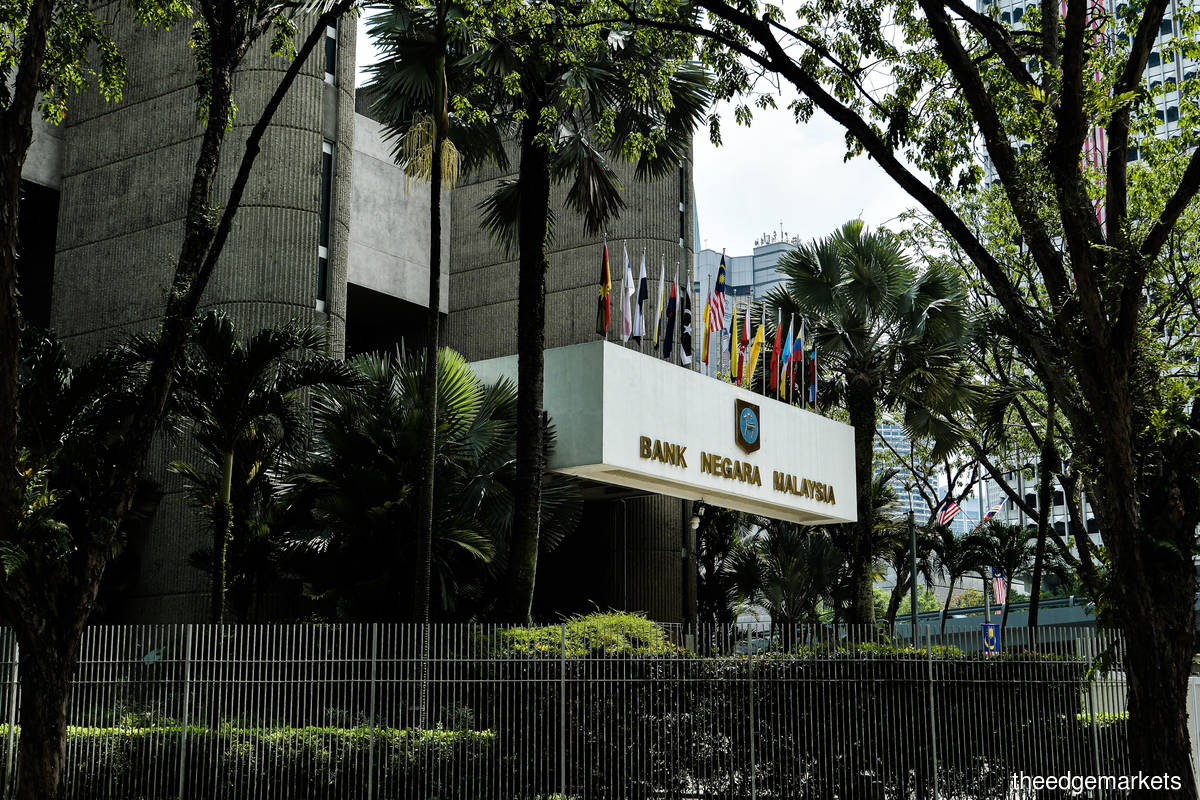
- Malaysian REITs would still leverage on robust domestic spending, lower bond yields and active inorganic growth strategies, according to RHB Investment Bank Bhd.
KUALA LUMPUR (July 10): Bank Negara Malaysia’s (BNM) overnight policy rate cut may improve sector sentiment, but its impact on real estate investment trusts (REITs) is expected to be limited, with only modest borrowing cost reductions, as market valuations have largely priced in the move.
In a research note on Thursday, Public Investment Bank highlighted BNM’s statutory reserve ratio cut, from 2% to 1%, injecting some RM19 billion in liquidity into banks earlier this year.
“We estimate that the impact on earnings of REITs (those with floating rates) under coverage is minimal at about 1% to 2%. All told, we keep our earnings estimates unchanged for now,” it added.
Malaysian REITs would still leverage on robust domestic spending, lower bond yields and active inorganic growth strategies, according to RHB Investment Bank Bhd.
“We think the pros outweigh the cons, most notably from the expansion of the sales and service tax (SST), which could potentially provide a downside risk to rental reversions, of which the REITs with strong asset quality should be relatively shielded from,” said the research house.
On Wednesday, BNM lowered the OPR by 25 basis points to 2.75%, marking its first cut since 2023. The move was anticipated by roughly half of the 23 economists surveyed by Bloomberg.
RHB noted that several REITs could record stronger earnings on the back of ongoing acquisitions and refurbishment efforts.
Additionally, it said that some REITs could hold off on rental reversions for selected tenants to preserve long-term relationships while awaiting shifting electricity tariff costs. This was evident in how REITs previously delayed raising service charges due to higher electricity charges, according to RHB.
The yield spread between the Bursa Malaysia REIT Index and 10-year Malaysian Government Securities (MGS) currently stands at around 200 basis points — roughly 0.5 standard deviation above the historical mean. Year to date, the 10-year MGS yield has declined by about 38 basis points, mirroring the trend in global bond markets.
Kenanga Research in a separate note said the OPR cut is a positive catalyst for REIT valuation, which is derived from MGS yield assumptions.
However, the house noted that year-to-date, despite the newly implemented SST charges on rentals which are negative news to REITs, the REIT Index has gone up close to 6%, outperforming the market with the FBM KLCI and most sectors still in the red.
“This implies that investors have largely priced in the anticipated 25-basis-point rate cut by BNM. The 10-year MGS yield has fallen to about 3.45%, which is broadly reflective of implied MGS yields for our REIT portfolio of about 3.5%.”
Kenanga believes the rate cut was a pre-emptive measure by BNM and as such has kept its MGS yield assumption at 3.75%.
The house kept its ‘neutral’ stance on REITs.
RHB maintained an ‘overweight’ stance on the sector with Pavilion REIT (KL:PAVREIT) as its top pick.
Meanwhile, Public Investment Bank maintained its ‘neutral’ view on the sector and raised its target price for IGB REIT (KL:IGBREIT) to RM2.50 from RM2.10, following the proposed acquisition of the Mid Valley Southkey mall.